 Wolf&Grayson Editorial
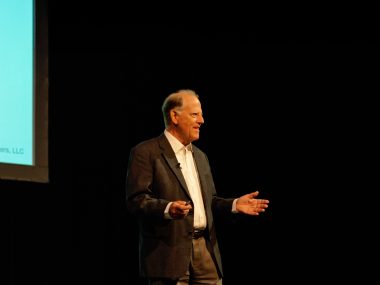
An agency can sign a nine-figure agreement, spin up two workloads, and get celebrated internally as a win. That is not adoption. It is an expensive pilot with good optics and a built-in delayed failure. The difference between contracted workloads and activated ones is where most public sector ecosystem strategies quietly fall apart, and where Bryan Lee, a public sector ecosystem leader with deep experience driving measurable adoption across complex multi-party motions, has spent his career building the frameworks that close that gap. “Utilization is the live signal,” Bryan Lee states. “Ecosystems that optimize purely for revenue close will consistently overcount success and undercount churn risk.”
Alignment Before the Signature, Not After
Most multi-party ecosystem motions fall apart at the same moment: the alignment meeting happens after the agreement is signed. By that point, urgency has dissipated, roles are undefined, and the first post-signature meeting becomes a scramble to figure out who owns what. Bryan Lee’s approach inverts that sequence entirely. The most important meeting in any complex ecosystem deal happens in person, before paperwork is finalized, with a clear agenda and defined milestones agreed by every party in the room.
The right participants for that pre-signature meeting are the executive stakeholder responsible for adoption, the signatory or their direct representative, the contracts team owner, the sales leader, the cloud solution provider (CSP) representative, and a project manager with explicit milestone tracking and pivot authority. Every seat has a defined role. Everyone leaves knowing what they own and what ‘off track’ looks like before it happens. “Urgency doesn’t transfer once a deal closes,” Bryan Lee reflects. “It has to be manufactured.” The operating model he applies is four ones: one message, one team, one motion, one metric, but it only functions if roles and milestones are locked before everyone disperses back to their own organizations.
Why Pilots Stall and What Actually Scales
The most common failure pattern in public sector adoption is not technical. It is leading with a discount rather than a business justification. Opening with cost savings or a promotional offer immediately makes the conversation transactional, and the room is lost before trust is earned. What scales is holding strategy sessions before the proposal is finalized, focusing on the actual problem being solved, examining the downstream and upstream impacts, identifying which departments are affected and aligned, and determining who owns the transaction and reporting on the agency side. These are pre-signature requirements, not post-signature questions. Skipping them means spending twice as long resolving issues after go-live when leverage is gone. The other failure mode is a contract architecture that was never built to grow. A pilot stood up on a sole-source exception cannot scale through a competitive vehicle. The full procurement path needs to be known before a solution is designed, not after it has been demoed three times to stakeholders who never had the authority to expand it.
Start With the Problem, Not the Product
The agencies moving fastest on AI are the ones that started with a specific problem, mapped the solution to an existing budget line, and let outcomes justify expansion. Richmond, Virginia, used cloud-based contact center AI to reduce 911 call wait times and ease cognitive load on human dispatchers. Nobody was replaced. Dispatchers got back the seconds that matter in an emergency. California’s Employment Development Department routed routine inquiries to AI-assisted self-service and gave caseworkers a unified view across interaction channels. Caseworkers stopped answering repetitive questions and focused on the complex claims that require human judgment. Language access improved across diverse communities in the process.
The framing that lands in the public sector is never that AI will transform an agency. “It’s that AI will give your specialists their time back so they can do the work only they can do,” Bryan Lee states. “That’s defensible to oversight. That’s the story departments can walk into an appropriations meeting with.” Business justification first, measurable outcome second, technology third, in that order, every time. The leaders building durably right now are treating AI governance the same way they treat procurement compliance: as foundational infrastructure, not overhead that can be addressed after the system is already running.
Follow Bryan Lee on LinkedIn for more insights on public sector ecosystem strategy, measurable AI adoption, and building partnership models that drive real utilization rather than contracted optics.