 Wolf&Grayson Editorial
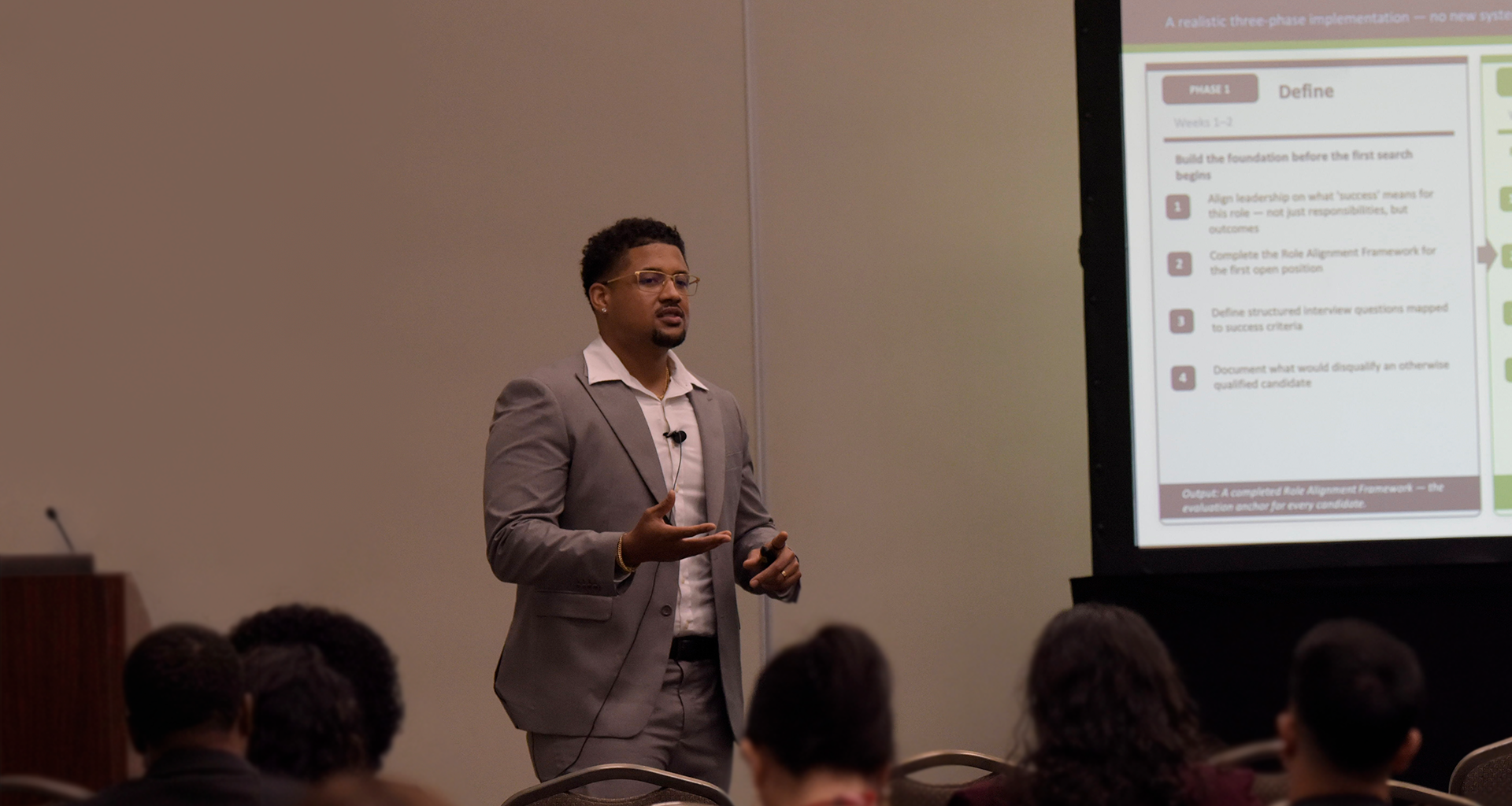
Hiring failures rarely announce themselves as hiring failures. They show up as a new manager who never quite gets traction, a project that slips two quarters, a backfill six months after the onboarding paperwork was filed. By the time the cost registers on a budget line, the decision that caused it is long buried under interview notes nobody kept. Jeff Dumé, who leads talent strategy at BuildFit AI, argues the problem starts much earlier than most leaders assume, before a single candidate is contacted. “The real cost of an unstructured interview is the loss of time, money, and confidence in your ability to make hiring decisions,” he says. That last item deserves more attention than it gets. Money and time are recoverable. Confidence is what erodes when a leadership team stops trusting its own judgment about people, and once it goes, every subsequent hire gets slower, more committee-driven, and more expensive.
Most Hiring Problems Are Clarity Problems In Disguise
The common diagnosis is that the process is broken. New questions get drafted, assessments get bolted on, a vendor gets hired. Dumé has watched organizations burn months on exactly that work, while the defect sat untouched. “I’ve seen organizations spend months trying to improve their hiring process when the real issue was that they never properly defined the position in the first place.” Roles tend to get written in reaction to an immediate problem, which means the job description describes the symptom rather than the outcome. He recalls a client hiring for a specific position where his questions kept surfacing a different picture than the one on paper. When he reflected it back, they recognized it immediately. That was the role they needed. The posting had simply never caught up.
This is why so many companies that believe they run a structured process do not. Alignment on questions is cosmetic. Alignment on what success looks like is structural, and Dumé finds departments frequently carrying different pictures of it without realizing they disagree. His test is deliberately uncomfortable: if an organization cannot consistently identify what makes an existing employee successful, it has no realistic chance of spotting that capability in a stranger across a table. The diagnostic he recommends before touching anything else is three questions: What does success look like in this role? What outcomes are expected? What separates top performers from average ones? “Most hiring problems aren’t process problems,” he says. “They’re clarity problems that organizations try to solve with process improvements.” The reason the harder path gets avoided is not ignorance. Structured hiring forces leaders to answer difficult questions about expectations, performance, and accountability, and to admit where they lack clarity.
Structure Does Not Remove Judgment, It Gives Judgment A Standard
The resistance to structured frameworks usually arrives dressed as a defense of instinct. Experienced leaders say they know talent when they see it and that scorecards flatten something human. Dumé’s counter is that unstructured interviews do not preserve judgment at all, they privatize it. “Candidates interview at the level of the interviewer, not the other way around,” he says. Without a shared framework, each interviewer falls back on personal opinion rather than role requirements, which means the candidate’s outcome depends largely on who happened to be free that week. That is not instinct. That is variance.
What structure actually does is give good judgment something to measure against. “Structured hiring doesn’t remove human judgment,” Dumé says. “It helps people apply that judgment against a consistent standard, which leads to better hiring outcomes.” There is a second payoff that organizations consistently undervalue. He sees too much weight placed on experience and not enough on what sits behind it: the behaviors, problem-solving ability, adaptability, and approach to work that determine whether someone solves the problem in a way the business can absorb. Most problems have several viable solutions, and different candidates bring different routes to the same outcome. That distinction only becomes visible when the outcome has been defined first. Absent that, interviewers default to the résumé, which is the one artifact every competent candidate has learned to optimize.
AI Will Amplify Whatever Clarity You Already Have
The case for AI in hiring is usually framed as a fix for human inconsistency. Dumé sees the premise backwards. “If an organization lacks clarity on what success looks like in a role, AI won’t solve that problem. In many cases, it will amplify it.” The same logic governs bias. Introducing a tool into a biased process does not neutralize the bias, and sometimes it hardens it, because the output now carries an air of objectivity that nobody interrogates. The misconception he identifies is organizations handing technology the authority to define what a good candidate looks like, when that responsibility should never leave the building.
His alternative is to use technology to widen the evidence base rather than narrow it to a single verdict. Rather than leaning on one opinion, score, or decision point, he favors evaluating candidates across multiple dimensions tied to role-specific success criteria, on the reasoning that more relevant information makes patterns easier to see and decisions easier to defend. This leads directly to the compliance exposure most teams are underweighting. “If you can’t explain how you arrived at a hiring decision, you have an accountability problem.” Regulators and plaintiffs will not be satisfied by a score with no documented reasoning behind it. Dumé’s position is unambiguous: AI should support human judgment, not replace it, and accountability belongs with people. The next 18 months will test that, as résumés converge toward sameness, candidates grow less tolerant of long opaque processes, and recruiting budgets tighten. His read on who comes out ahead is not about spend. It is about which organizations manage to create the most clarity, for candidates and for themselves.
Follow Jeff Dumé on LinkedIn for more insights on structured hiring, workforce intelligence, and building interview processes that hold up under scrutiny.