 Wolf&Grayson Editorial
Right now, most organizations are in a rush to adopt AI without understanding its effects, which can lead to wasted investments, mistrust, and tools people do not use, like chatbots that frustrate customers or analytics platforms that never guide action. As AI becomes inseparable from daily life, similar to smartphones, the stakes rise: if we get the design wrong, we risk weakening truly human relationships and decision-making instead of strengthening both. And the challenge goes deeper: we are messing around with how we create memories at scale.
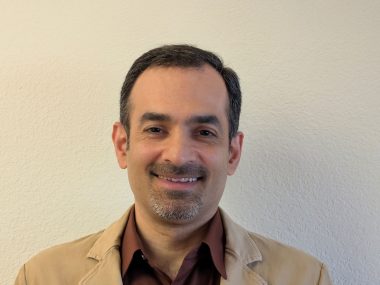
“AI can either multiply ignorance or lead to exquisite discoveries,” says Chris L. Whaling, founder of Method Human. “It depends how we use it.” That perspective stems from decades leading global intelligence, technology, and operations programs, where he saw powerful systems fall short because they were deployed before anyone asked what people truly needed from them. As AI accelerated into boardrooms and public institutions, he noticed leaders treated it as a feature set or a competitive edge rather than as something that shapes how humans think and relate to one another.
This became the starting point for Method Human, the framework Whaling is developing to ensure AI supports real human problem solving. Rather than asking what AI can do, it first asks what people need help with so they can make clearer decisions, retain knowledge, and stay connected to the experiences and relationships that shape them. “If you’re not able to say someone is now able to solve a problem that truly matters to them in ways that weren’t possible before, then what are you doing?” he says. In practice, Method Human functions as a decision lens. It begins with what people are trying to achieve and how they interpret the world, recognizing that memory, trust, and identity ultimately determine whether technology strengthens or weakens human capability.
Technology Meets Perspective
Whaling’s decades of international experience shaped his belief that effective AI requires understanding how individuals interpret the world. He learned firsthand that diverse environments generate diverse mental models, and those models influence what people expect from technology. “You can never underestimate how different the background and experiences of individuals are,” he says. Those differences become the starting point for AI that resonates.
He recently led AI Analytics training sessions in San Juan, PR to learn and dive into a microcosm of the diversity around AI, revealing that meaningful solutions require acknowledging varied motivations and cognitive anchors. Participants came from all walks of life and approached technology from many vantage points: some a process optimization angle, others for data forecasting, and others to start a family business. Tools built without that awareness risk irrelevance, a lesson that pushed Whaling to move away from standardized “cookie cutter” AI practices and toward localization through ontologies, or structured ways of organizing knowledge within specific contexts. “All ontologies are ultimately connected,” he says, emphasizing that even when grounded in different cultural or professional realities, these knowledge structures ultimately reflect shared human connections.
Trust: The Deciding Factor of Innovation
Whaling’s insights also extend into organizational leadership. He notes that C-suite leaders rarely engage him when conditions are stable. Instead, they reach out after conventional consulting paths have failed to produce outcomes. “Everyone is reading the same thing and the same blind spots get propagated,” he says. His role becomes a form of intellectual red-teaming, helping leaders rethink assumptions and clarify goals.
But technical precision alone does not guarantee progress. Whaling highlights trust as the decisive variable in whether recommendations move forward. “It may not matter what you know or who you know. It matters how you know,” he says. Leaders advance decisions when they trust the person guiding them, not merely the facts of the proposal. This human-centered view of technology adoption reinforces his thesis: successful technology depends on how you build relationships and how you own knowledge as much as on objective capability.
He compares the rise of AI to the way smartphones reshaped human behavior. “We used to hold each other’s hands,” he says. Today, people clutch devices that have become extensions of memory and attention. He sees AI headed toward a similar integration, though he believes the outcome remains a choice. “AI is seeking the same implant,” he says. “But who is really asking for themselves: What is my role in ensuring, if it is to happen, I understand how to make it helpful to me?” Method Human positions itself as an early adopter of the thinking and inquiring needed to drive humans to pragmatic, life-affirming answers to these types of questions.
The Human Cost of Forgetting What Matters
One of Whaling’s deepest concerns centers on human memory and AI. His personal encounters with Alzheimers in his extended family highlighted how memory loss reshapes identity and relationships. At the same moment, AI is rapidly changing how information is stored, retrieved, and even generated. He sees a risk: in the rush to automate thinking, humans may weaken their connection to memory, which he views as fundamental to who people are. “These memories are really important,” he says. He believes that as AI evolves, it must enhance memory rather than erode it, strengthening trust and decision making rather than distancing people from the experiences that define them.
Method Human offers a path toward aligning AI risks with the right questions. It centers people’s needs, mental models, relationships and goals before deploying tools. It calls for intentionality: a commitment to ask why technology should exist before asking how it can be built. In Whaling’s view, that shift in focus on understanding the critical pathways to human flourishing is essential as AI approaches deeper psychological integration.
To follow Chris L. Whaling’s insights or learn more about Method Human, connect with him on LinkedIn.