 Wolf&Grayson Editorial
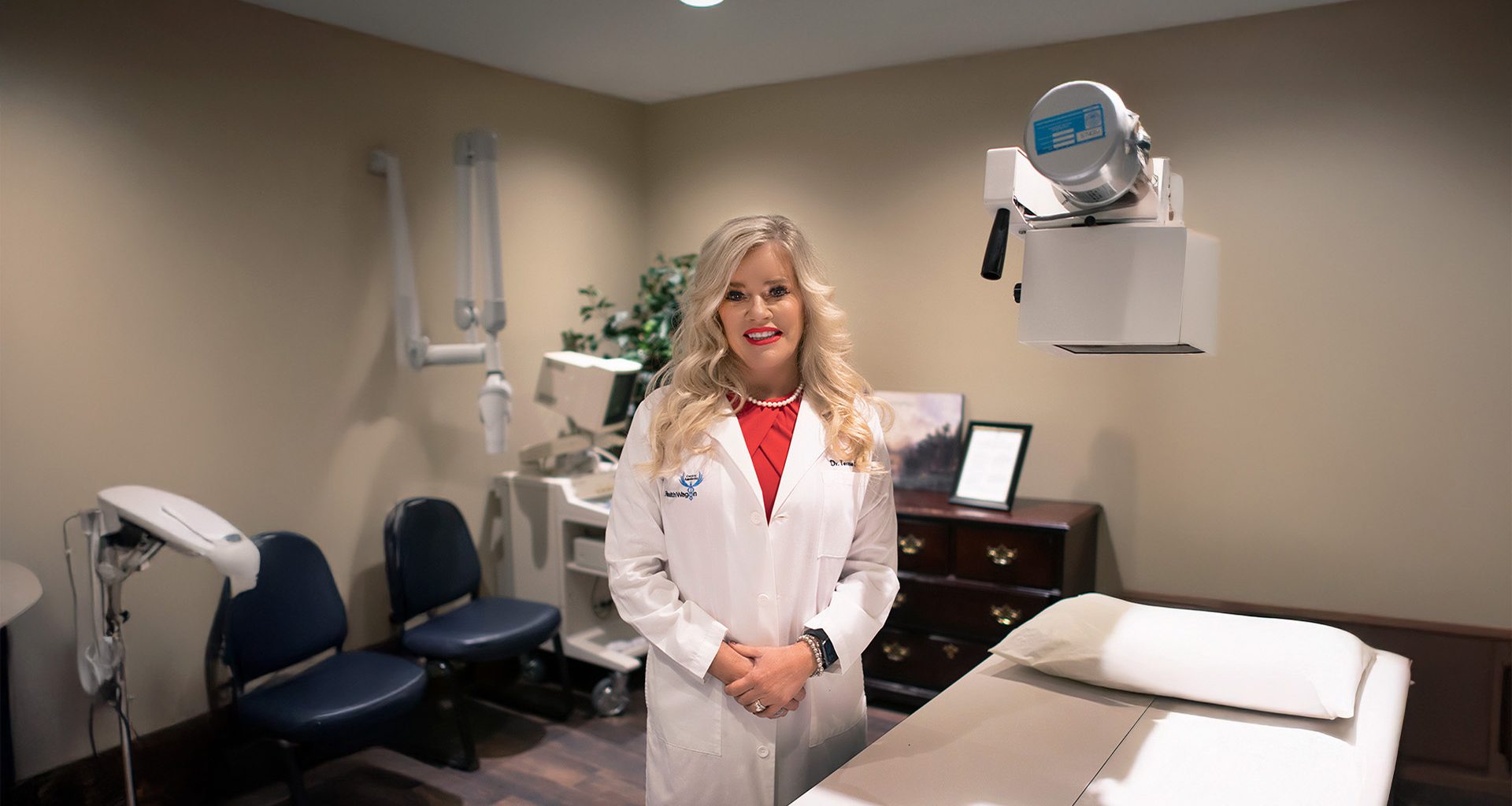
For more than three decades, Dr. Teresa Owens Tyson, DNP has been reshaping what healthcare looks like in the Appalachian Mountains. As President and CEO of The Health Wagon, the nation’s oldest mobile health clinic serving Appalachian communities since 1998, she has spent her career confronting the profound disparities that define rural healthcare. “When I started here 32 years ago, we had no existing formal structure of healthcare for far too many individuals,” she says. “We developed a unique model of delivery by bringing multiple facets of healthcare under one roof. It is truly integrated care.”
She carries a deep understanding of what it means to face healthcare barriers. Raised in a coal‑mining family and shaped by significant health challenges her community endured, she remains closely connected to the Appalachian region and attuned to its needs, grounding her framework for integrated care. The Integrative Comprehensive Care Collective (ICCC) is a model she developed that aims to transform fragmented services into a coordinated and accessible system built around real patient needs. “It brings everything together so patients have what they need in one place,” says Dr. Tyson.
The Weight of Structural Barriers
Her work exposes the practical obstacles that stand in the way of integrated care, revealing a landscape shaped by financial strain, limited infrastructure, and scarce workforce capacity. Rural systems must stretch every dollar while still meeting complex patient needs, and persistent provider shortages intensify these pressures.
These two enduring challenges—cost and limited clinical staffing—form the core barriers. “Healthcare is extremely expensive,” she says. “Providing dental care is expensive, providing medications is expensive. Bringing all the facets of the ICCC model together is costly.” Beyond cost, rural communities face chronic workforce shortages that compound access issues. “We live in a health professional shortage area. You do not have enough providers, and people often do not want to move to rural areas. Some of the best talent goes to metropolitan areas.”
What Effective Integration Looks Like
These constraints make the implementation of integrated care more difficult in Appalachia than in many other regions. Dr. Tyson’s ICCC model proves it can be done. She highlights three high-impact practices that have reshaped outcomes for her patients. Unified Care Navigation: Dr. Tyson describes unified navigation as the glue that holds the entire model together. Her team conducts proactive outreach, often calling or visiting patients before they miss appointments. Technology can strengthen this even further. “Using risk-stratification algorithms can identify the patients who are most likely to need us the most. It helps convert care from episodic and reactive to continuous and relational.”
Integrated Access Points: The Health Wagon integrates primary care, dental services, pharmacy support, behavioral health, telehealth, chronic disease management, and social-determinant resources into a single ecosystem. “It removes the number one barrier in fragmented care,” says Dr. Tyson. “Patients do not have to navigate multiple providers or locations.”
Closing the Loop on Specialty Care: Telehealth partnerships, particularly with the University of Virginia Health Systems, have made specialty care accessible for patients who would otherwise go without it. “Our people are able to have the finest access to healthcare in this nation,” she says. For rural patients, this continuity is lifesaving.
These practices continue to work because they’re adapted to realities on the ground. They acknowledge long travel distances, inconsistent broadband, financial hardship, and the cultural pride that often prevents people from asking for help.
AI, Remote Monitoring, and a More Equitable Future
Emerging technologies are creating a turning point in closing long-standing gaps in healthcare access. “I am very optimistic about AI,” she says. “It can level the playing field for patients in low-resource areas. They will have the same predictive insights as someone in a metropolitan area.” Her team already uses AI for procedures such as colposcopies for women with abnormal Pap smears and is exploring retinal imaging systems. For a region where cardiovascular disease and lung cancer are leading killers, early detection powered by AI has life-changing potential.
It’s also helping to strengthen personalized care. “It gives patients exactly what they need and not just generic instructions. It incorporates comorbidities, lifestyle, and social determinants of health,” she says, noting that many rural residents do not openly discuss barriers like food insecurity or lack of transportation. AI-driven prompts within electronic health records can reveal these hidden needs and ensure patients leave with practical support.
She also sees AI as a means of reducing implicit bias. “It standardizes diagnostics and takes the human decision-making that can be affected by stress or bias out of the equation. That ensures safer, more consistent care.” Remote patient monitoring reinforces these gains by giving clinicians real‑time insight into patient needs. Continuous glucose monitors, for example, have transformed diabetes management in her clinics. “Patients know in real time how foods affect their blood sugar. It creates accountability and prevents deterioration before it occurs,” she says.
A Model with National Implications
Dr. Tyson’s ICCC model is not only transforming care in Appalachia; it is illustrating what sustainable rural health innovation can look like across the country. Her approach is rooted in compassion, partnership, and a refusal to accept that geography should determine health outcomes. “Our patients have never been on the same playing field,” she shares. “We are working to change that.”
To learn more about Dr. Tyson’s work, connect with her LinkedIn or visit her website.