 Wolf&Grayson Editorial
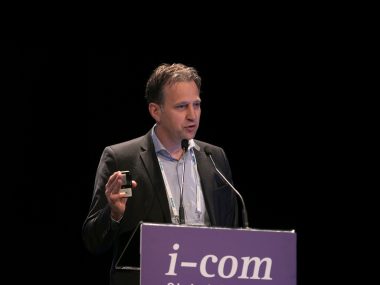
Eamon Graziano, CEO of B&E Management and Consulting, argues that the difference between sustainable scale and operational chaos comes down to one principle: clarity. For many early-stage companies, growth is often mistaken for progress. Revenue rises, teams expand, and activity increases, yet the underlying systems remain fragile.
“Performance problems often come down to workflow design, not talent,” Graziano says. “If the system tells people exactly what to do next, results improve almost immediately.” That thesis underpins his work as a business scaling strategist and digital transformation leader. Rather than adding headcount or complexity, Graziano focuses on building enterprise-ready operations that allow lean teams to perform with precision, consistency, and speed.
When Systems Replace Guesswork
At the center of Graziano’s approach is a fundamental shift in how companies use their internal tools, particularly customer relationship management (CRM) systems. “Most small businesses technically have a CRM, but it’s really just a database. It stores information, but it doesn’t tell the team what to do next.” The transformation begins by redesigning the CRM into what he describes as a daily task engine. Every lead is assigned a defined stage, clear ownership, and a priority level. Leadership gains immediate visibility into where deals are stalling, while frontline teams know exactly which opportunities require attention.
This level of operational clarity allows companies to enforce response standards and identify bottlenecks in real time. In one case, this shift helped increase close rates from 8% to 30% without changing the team itself. “If the CRM clearly tells a salesperson, ‘These are the three leads most likely to close today and they require immediate follow-up,’ productivity and close rates improve almost immediately.”
Discipline Without Rigidity
Graziano’s leadership philosophy is shaped by his background as a Marine Corps officer, though he is quick to challenge common assumptions about military-style execution. “The misconception is that it’s rigid or authoritarian. In reality, good leadership is about clarity of the mission and decentralized execution.” In practice, this translates into three structural principles:
- Teams must understand exactly what success looks like.
- Roles and ownership must be unambiguous.
- Once objectives are clear,individuals must be trusted to execute. “The way I describe it is discipline in the system, flexibility in the execution.”
This balance creates an environment where teams operate with both structure and autonomy. Rather than slowing organizations down, it enables faster decision-making and stronger accountability, particularly in lean environments where ambiguity can quickly stall progress.
Scaling Only What Works
One of the most common mistakes Graziano sees is premature scaling. Many founders attempt to grow before their operations are stable, which amplifies existing inefficiencies. “Scaling is essentially multiplying a system, so the system has to exist before you multiply it.” He points to three signals that indicate whether a business is ready to scale:
- The first is consistency. If revenue fluctuates unpredictably, growth will magnify instability.
- The second is process reliability, meaning the team can deliver a consistent customer experience without constant founder intervention.
- The third is real-time visibility into key metrics, such as pipeline, capacity, and cash flow. “If the business works when the owner steps away for two weeks, it’s ready to scale. If it breaks, the systems need work first.”
AI and the New Operational Advantage
The gap between lean companies and large enterprises is narrowing, driven largely by advances in AI. Historically, larger organizations held an advantage because they could invest in extensive operational infrastructure. That advantage is now eroding. “A 10-person team can now operate with the output of a 30-person team,” Graziano says. However, he cautions that many businesses are approaching AI incorrectly. Instead of redesigning workflows, they treat it as a surface-level enhancement. “The companies that win won’t just adopt AI tools. They’ll rebuild their workflows around automation and data visibility.”
This shift requires careful decision-making, particularly when selecting technology partners. Graziano emphasizes the importance of vetting AI providers for long-term capability and depth, noting that many tools lack the sophistication to support complex operations. AI is not simply a productivity tool. It is an architectural layer that reshapes how businesses operate, enabling smaller teams to compete at an enterprise level.
Building Systems That Outlast Growth
Businesses scale successfully when their operations are treated as assets rather than afterthoughts. By aligning systems, data, and team execution, lean organizations can achieve levels of performance that were once reserved for much larger companies. The result is not just growth, but control. Companies gain the ability to expand without losing visibility, consistency, or speed.
Follow Eamon Graziano on LinkedIn or visit his website for more insights.