Wolf&Grayson Editorial
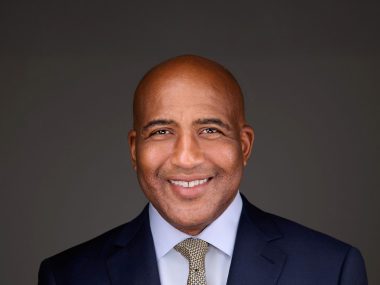
Sales has never been the natural domain of technical founders. Most spend their early days building products, not pitching them. Yet selling remains the most critical skill for any founder trying to grow an early stage company. Richard Achée, Founder & CEO at Found42, has spent over 15 years at Google before helping founders scale through AI-powered strategies. He believes artificial intelligence can bridge this gap in a way that’s practical, accessible, and surprisingly personal.
Learning Sales from a Fearless Founder
Achée’s approach to founder-led sales comes from watching entrepreneurs who had zero sales experience figure it out the hard way. One founder in particular stuck with him. “He’s based in Thailand and was working completely alone. When I met him, he had no staff,” he remembers. “I made a bet on him. I just felt he was going to be really successful.” That bet paid off. The founder became one of Google’s top partners within a few years.
What impressed Achée most was watching someone completely out of their element push through anyway. “This was someone who had no sales background. He worked with his dad for most of his life,” he says. “So I saw him going outside of his comfort zone and being bold. Knocking on the door of a company like Google as a solo entrepreneur, that’s a pretty bold move.” Achée co-sold with him and other start-up founders—none of whom identified as sales people—and in the process, sponsored two Google acquisitions.
Using AI to Build Sales Confidence
The biggest thing AI brings to founder-led sales isn’t fancy automation or clever prompts. It’s confidence. “If there’s one thing AI can do a great job of, it’s confidence,” Achée explains. “By really working through your message and having that sort of sparring partner that can help you build your confidence.” Founders question themselves constantly when they’re outside their comfort zone. Am I saying this right? Did I just mess that up? “I think you can get in your own head,” he notes.
Richard regularly uses AI, specifically custom GPTs, for negotiation preparation. He creates these simulations by inputting all the relevant context, including the personalities and all stakeholders involved, allowing the AI to take on a specific character and initiate the negotiation.
Achée stumbled upon this powerful capability by accident about nine months ago. As an experiment, he used ChatGPT’s Voice Mode and told it to enter a role-play mode. “I’m going to be James in this conversation and here’s my opening salvo,” the AI responded, which Achée described as “mind blowing.”
This practice is valuable because AI provides a completely safe, unbiased space for rehearsal. Achée notes that there is none of the complexity or pressure that comes from being coached by a person who might also be part of the final decision-making team on a partnership or acquisition. It’s simply a space for pure practice.
Starting Simple with Practical AI Steps
Achée tells founders to start simple. Pre-call research. That’s it. “Just a very basic prompt, a one-liner: research company name, summarize their value proposition, their ideal customer profile, their recent announcements and their likely pain points for whatever your product is.” Once founders start using AI for their most important work, they figure out what it does well and what it doesn’t. He runs AI automation every morning. It scans his emails, knows the context of his calls, gives him a brief, checks his Google Drive for relevant documents, and pulls the latest news. “When you’re going from meeting to meeting, being able to get that prep is hugely valuable,” he says. “It’s a very simple automation that takes about 10 minutes to set up for anyone.”
His favorite tool is Fixer, which generates first drafts of follow-up emails. “I will never send that first draft,” he admits. But it gets him past the procrastination. “When you’re getting out of your comfort zone, that’s when procrastination and avoidance can come in.” For discovery calls, he uses custom GPTs to pull insights from transcripts and format them his way. “I get my discovery call done, send that over to my customer the same day. And it just shows that you’re listening and you’re not just sending a generic transcript or generic summary.”
Understanding Culture in AI Negotiations
After living overseas for 14 years, Achée knows American sales tactics don’t work everywhere. He built cultural awareness into his negotiation GPT. One founder he works with had a customer in Ghana. They’d planned the whole negotiation without mentioning Ghana. “We did a plan from a very US centric point of view. And then as soon as we said, add this context, understanding this customer from Ghana, how would you adjust it? It changes everything. It reshaped the language, our tone.” AI can help with basic stuff too, like figuring out how to address someone with a complicated name. “Especially when you’re dealing with someone outside the U.S., you might not know how to address them. You don’t want to just randomly pick one of the four names and assume that’s their first name.” He uses AI to unpack names and titles. “This is the formal salutation, this is their degree, this is their father’s name, etc. That sort of cross cultural understanding and nuance goes a long way.”
Achée gets annoyed when people claim AI will eliminate sales jobs entirely. “I think that one of the problems we have with AI right now is people talk in absolutes. That’s part of our social media culture,” he says. The reality is messier. AI will change how sales works, but it won’t replace the human parts that actually matter. “Tell me how much time do you spend updating CRM? How much time do you spend taking notes?” he asks. Most salespeople and founders would rather spend time talking to customers. “Well the great news is that it could go up to 70 or 80%.” He points to radiology as an example. People predicted AI would end the profession. Instead, it automated analysis and busy work. “Now they’re talking to people more often,” he notes.
The same goes for sales. AI handles the friction so humans can do what they’re good at. But there’s a catch. “You shouldn’t necessarily trust these things. These are probabilistic systems.” AI makes things up sometimes, especially with hard numbers and legal precedents. “I continue to encourage people to be cautious and make sure that they’re using these tools while not turning them into a crutch.” For founders trying to figure out sales while building a company, AI offers something valuable. Not a replacement for human skill, but a way to practice without judgment and save time on everything else.
Follow Richard Achée onLinkedIn for insights on AI-driven sales, founder growth, and negotiation strategy.