 Wolf&Grayson Editorial
Diagnostics have never been more advanced. From next-generation sequencing and liquid biopsies to AI-assisted imaging and real-time risk scoring embedded in electronic health records (EHR), the industry has made remarkable technical strides. Health systems can now detect subtle molecular signals, flag high-risk patients earlier, and generate insights from vast longitudinal data sets in seconds. Still, patients wait too long for the right answers.
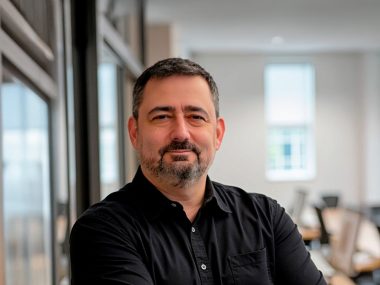
For Raymond Tarr, CEO of Sagacity Diagnostics, that disconnect is the central challenge facing BioPharma and the broader diagnostics industry. “Diagnostics only matter when they reliably change the decision at the bedside,” Raymond says. “We design everything backwards from that point of impact.” It’s a shift from where he stood a decade ago. After more than 25 years leading commercial strategy and market expansion across global diagnostics and BioPharma organizations, Raymond once believed that equipping clinicians with the right test and diagnostic label would naturally translate into better outcomes. Experience taught him otherwise.
Redefining What Diagnostics Are Meant to Do
Raymond’s thinking evolved through both professional and personal experience, including navigating the healthcare system alongside his wife. A test alone does not improve care. It must be embedded in clinical workflow, aligned with incentives, and delivered at the precise moment when a decision is being made. “I’ve learned that tests don’t change lives unless they are embedded into workflow, the incentives, and the story of that patient at that moment in care,” he explains.
At Sagacity Diagnostics, that belief shapes every solution. Rather than focusing on test volume or standalone innovation, the company prioritizes EHR-native pathways, proactive patient-finding tools, and accountability metrics tied to time to correct diagnosis. The emphasis is on shortening the diagnostic journey, particularly in complex areas such as rare disease, oncology, and cardiology, where delays can permanently alter patient trajectories. The result is a reframing of diagnostics as a system-level intervention designed to influence real-time clinical decisions.
The Real Bottleneck in the Diagnostic Journey
Technology is surprisingly not the primary obstacle. The deeper blockage lies at the intersection of clinician bandwidth and insurance structures that interfere with best clinical practice. “We ask clinicians to be pattern recognition engines, guideline experts, data navigators, and insurance coverage specialists, all inside of a 15-minute visit,” he says.
That reality exposes an uncomfortable truth. Diagnostic solutions are often built for ideal users operating in ideal workflows, rather than for physicians managing their fifth complex patient of the morning. Even the most sophisticated decision-support tools can fail if they add friction instead of reducing it. Raymond pushes for systems that surface the right test at the right moment with minimal clicks, while aligning payment models so that the most clinically effective action is also the easiest one to take.
Building Solutions That Outlast the Champion
If tasked with improving time to correct diagnosis in a large health system within 24 months, Raymond begins with a clear guiding principle. “If it can die when the champion leaves, it’s not a real solution.” His framework anchors change in three non-negotiable moves during year one:
- Build the Data Infrastructure First. Health systems must collect sufficient population-level data to identify the most effective testing strategies for the communities they serve. Raymond insists on transparent, live metrics tracking time to correct diagnosis, visible to both leadership and frontline teams. What gets measured consistently gets improved.
- Co-Design Clinical Workflow. Rather than training clinicians on a prebuilt pathway, Raymond advocates building the pathway alongside them. Real-world constraints, variability in practice, and competing demands must shape the solution from the outset. Adoption increases when physicians see their daily realities reflected in the design.
- Lock in Partnership Accountability. Agreements with diagnostics and pharmaceutical partners should tie value directly to earlier diagnosis and measurable outcomes. When financial and clinical objectives reinforce one another, initiatives are far more likely to survive leadership transitions and budget cycles.
AI as Augmentation, Not Replacement
Looking ahead five years, Raymond expects AI to become embedded into the core infrastructure of care. Triage, image interpretation, risk scoring, and patient finding for complex and rare diseases will increasingly rely on AI-driven tools. “AI will make the invisible visible,” he says, describing subtle patterns in laboratory results, imaging, and longitudinal records that clinicians alone may not detect in time.
He is unequivocal about the fact that AI will augment, not replace, clinical judgment. Its power lies in surfacing diagnostic hypotheses, prioritizing worklists, and ensuring fewer patients are lost in the system. The true transformation will be measured not by flashy standalone tools, but by how often the right clinical question is asked at the right time.
Assuming AI will automatically eliminate bias is naive. Without deliberate oversight, it could industrialize existing inequities at scale. “If we’re expecting garbage in to equal gold out, that’s where we’re going to fundamentally fail,” he says. “A clinician can read body language and interpret the subtle cues of a concerned caregiver in ways no algorithm can replicate.”
Human Connection Remains Non-Negotiable
The future of diagnostics depends on pairing data fluency and systems thinking with humility and human connection. The leaders who thrive will be those who can interrogate AI models, redesign workflows, and still sit with a patient in a way that builds trust. The promise of advanced diagnostics and AI is significant. But the ultimate goal is unchanged: faster, more accurate answers that lead to better decisions and better lives. By designing systems that align technology, incentives, and human judgment, Raymond believes the industry can finally close the gap between innovation and impact.
Follow Raymond Raymond on LinkedIn or visit his website for more insights.