 Wolf&Grayson Editorial
Leaders are not hired for intent. They are hired for results. Intent only matters if it converts, and the gap between what a leader intends and what an organization produces is not normally caused by a lack of good faith. It is caused by misalignment of priorities, behaviors, and incentives that accumulates quietly and surfaces loudly.
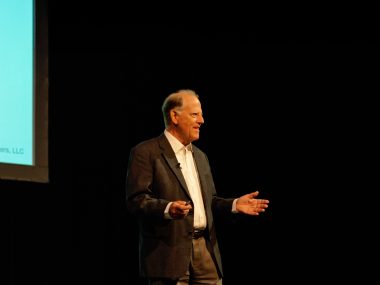
David Riordan Wood, an executive leader who has navigated acquisitions, restructurings, and market pivots across complex organizations, has spent his career studying where leadership actually breaks down. “The real breakdown is in alignment,” Wood states. “And if the organization isn’t aligned, the message wasn’t clear enough. That’s on the leader.”
When Good Performance Stops Adding Up
The earliest signal that a plan and its people have quietly separated is rarely a crisis. It is a shift in how progress gets reported. Teams begin describing activities instead of outcomes. A campaign was launched, a system was put in place, or an app was set up. These statements describe action without referencing the result. Meetings can remain smooth, updates can sound positive, and individual performance can look strong while actual organizational results quietly deteriorate.
What is happening in those moments, Wood explains, is that people are optimizing their own lane rather than the system they are collectively operating inside. Each person is performing well in isolation. The performance simply fails to add up to meaningful progress. “When things are broken,” he reflects, “good individual performance stops producing any real organizational movement.” By the time the divergence is visible in results, the separation has typically been building for weeks.
The Leader Owns Closing the Gap
The communication gap between leaders and their teams is structural before it is personal. Leaders think conceptually and broadly. Teams operate specifically and operationally. When a leader says something once and assumes it has landed, the gap is already forming. Teams need direction that is reinforced, translated into their specific context, and directly connected to the activities they are actually executing.
Wood recommends a set of questions that make direction concrete rather than aspirational:
- What are we not doing?
- What would we stop if this direction is true?
- How will this show up differently going forward?
These questions convert abstract strategy into operational clarity, and they reveal quickly whether the organization has genuinely understood the direction or is simply nodding in its presence. “The leader owns closing this gap, full stop,” Wood insists. “Through repetition, storytelling, and making the direction operational.” There is no version of misalignment where the failure belongs to the team. If the organization did not align, the communication was not clear enough.
AI Does Not Solve Alignment. It Exposes Whether It Existed
As AI accelerates decision-making, the prevailing assumption is that execution becomes easier. Wood’s view is the opposite. Alignment becomes significantly harder. AI accelerates the rate at which decisions get made without ensuring any consistency in the decisions themselves. Different team members feeding different inputs into AI tools can move in wildly divergent directions simultaneously, and do so faster than any previous generation of misalignment.
“Without alignment, AI will help you move faster in different directions,” Wood warns. The technology does not create coherence where none existed. It simply reveals its absence at higher speeds and on a greater scale. This makes clear vision, defined strategy, and structured execution frameworks more critical than ever, not because AI requires them in principle, but because AI will ruthlessly expose their absence in practice.
The emerging challenge Wood identifies beyond alignment is what he calls output validity. AI tools produce authoritative-sounding outputs that can mask flawed, incomplete, or biased inputs, making them invisible to anyone reviewing the final answer.
The risk is false confidence, acting on an answer that looks sound but was built on assumptions nobody examined. The leader’s role must now include pressure-testing AI-driven thinking directly, asking what went into the prompt, what was excluded, how the output would break, and how it connects back to the overall strategy.
“The next challenge for leaders,” Wood observes, “isn’t alignment. It’s knowing whether the answer you’re acting on is actually sound.” More communication, more engagement, and more deliberate clarity are not soft leadership imperatives. They are the operational infrastructure that keeps a faster, AI-assisted organization from flying apart.
Follow David Riordan Wood on LinkedIn for more insights on leadership alignment, organizational clarity, and building the execution frameworks that hold in an AI-accelerated world.