 Wolf&Grayson Editorial
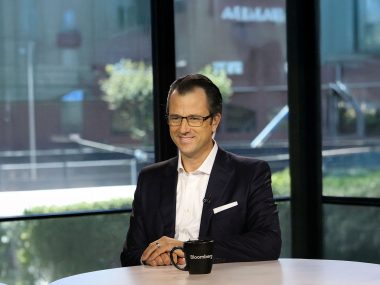
History is filled with brilliant technologies that never reached the market. From revolutionary materials developed in university laboratories to breakthrough defense systems capable of reshaping entire industries, innovation has not always guaranteed commercial success. “The breakdown almost always happens at what I call the translation layer,” says Keith A. Blakely, Chief Executive Officer (CEO) of The InVentures Group. “The space between what the lab can do and what the customer will actually pay for.” The challenge lies in navigating the difficult and often underestimated path from invention to commercialization. Over decades spent building and scaling deep tech companies, Blakely has seen firsthand how even transformative discoveries can collapse without the right market strategy, manufacturing roadmap, and financial structure in place.
Some of the technologies he helped bring to market have had global impact. For example, at EOTech, the holographic weapon sight system his team commercialized became widely adopted by military and law enforcement agencies after proving its value in combat environments. Earlier in his career, Blakely also contributed technologies used during the Chernobyl recovery effort. Those experiences have shaped Blakely’s perspective on technology commercialization and, below, he shares more on how the most successful deep tech companies approach commercialization with the same discipline as research and development (R&D).
Why Great Science Still Fails
According to Blakely, one of the biggest mistakes technical founders make is assuming that scientific elegance automatically creates market demand. In reality, successful science-to-market strategies begin with identifying a paying customer long before scaling operations. “I’ve watched really extraordinary products die because no one figured out who’s the first paying customer and what problem they would pay to have solved,” he says. That challenge becomes even more pronounced in advanced materials and nanomaterials commercialization, where the leap from laboratory success to industrial manufacturing can derail even promising ventures.
“Going from a beaker in a lab to a barrel – those are different companies,” Blakely says. “The gap between those beakers and barrels is massive.” Many deep tech founders underestimate how dramatically economics change during scale-up. A material that performs well at $400 per gram may never survive commercially if customers require it at $4 per gram or lower. Blakely encountered this firsthand while building Advanced Refractory Technologies, where General Motors became an early customer and eventually invested heavily in development partnerships and licensing. The final obstacle is often capital itself. Funding pathways for deep tech ventures require patience and alignment between investors and founders. “Raising the wrong money at the wrong stage from investors who don’t understand the timelines associated with deep technology, that can be fatal,” Blakely says.
Building Deep Tech Companies That Last
For investors evaluating early-stage enterprises, the signals of long-term viability are becoming increasingly clear:
- First, companies need more than a theoretical market opportunity. They need proof of commercial traction. “There’s a difference between a potential market and an actual named customer,” he says. “Someone willing to write a purchase order or sign a development agreement – that’s a signal.”
- Second, companies must demonstrate scalable manufacturing and realistic unit economics. Intellectual property alone is no longer enough to attract sustained venture investing. “Patents are necessary, but the real barriers to entry are manufacturing know-how, regulatory positioning, customer relationships, and integration,” Blakely says.
- Finally, leadership matters as much as the technology itself. The interim CEO playbook for early-stage companies often revolves around helping technical founders navigate the operational realities of scaling a business. Blakely argues that building deep tech companies requires founders willing to embrace the unglamorous aspects of entrepreneurship: hiring, regulatory compliance, fundraising, and surviving extended commercialization timelines.
“The science is necessary, but it’s not sufficient,” he says. “The team that can carry the science across that five to 10-year valley is what makes it a business.”
Commercialization Is No Longer a Linear Process
One of the biggest shifts reshaping technology commercialization is the shrinking timeline between scientific discovery and commercial deployment. Historically, companies spent years moving technologies out of universities or national laboratories before meaningful revenue generation became possible. Today, AI-enabled materials discovery, additive manufacturing, and rapid simulation tools are compressing that process.
“The companies that will define the next decade are the ones that treat commercialization as a parallel track to R&D, not a downstream activity,” Blakely says. This evolution is changing how strategic partners for science-based early-stage companies engage with founders. Investors increasingly expect capital efficiency and measurable progress rather than ambitious projections unsupported by customer validation.
“Unlike five years ago, the idea of raising $50 million on a deck and a dream is over,” Blakely says. “Investors want to see that you’ve gotten further on less.” At the same time, mergers and acquisitions in advanced materials and defense technologies continue to shape exit strategies for founders. Blakely points to EOTech as an example of how strategic positioning can accelerate growth and acquisition opportunities when commercial demand aligns with strong distribution channels.
Trust: Most Valuable Asset in Deep Tech
As global access to information, manufacturing, and capital becomes increasingly democratized, Blakely believes trust will define the next generation of category-leading companies. Founders can now build relationships with suppliers, customers, and investors across continents without relocating to Silicon Valley or Boston. Scaling nanomaterials companies globally no longer depends on proximity to traditional innovation hubs.
“Anyone with a computer can access the assets they need to build a company,” Blakely says. “But not everyone has the confidence or trust of the person on the other end.”
That dynamic helps explain why repeat founders continue attracting capital in uncertain markets. Investors are increasingly backing operators with demonstrated resilience, particularly after periods of economic disruption. For deep tech founders, attempting to bridge the gap between R&D and revenue may ultimately become the strongest competitive advantage of all.
Follow Keith A. Blakely on LinkedIn for more insights.