 Wolf&Grayson Editorial
Enterprise AI has reached a turning point. Boards expect measurable business outcomes and clear returns on investment. The conversation has shifted from experimentation to execution, raising a fundamental question: “What separates AI teams that consistently deliver business value from those whose projects never make it into production?”
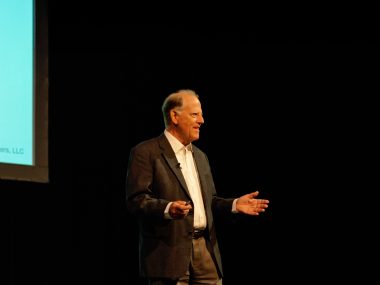
For David D. Ellison, Chief Data Scientist and Director of AI and HPC Engineering at Lenovo, the answer has little to do with finding the world’s most brilliant AI engineers. Success depends on creating multidisciplinary teams that combine technical expertise with business understanding, governance, and collaboration. “AI isn’t an individual sport. It’s more like Formula One. You don’t win because you have the best driver alone. You win because the entire team, the design team, the pit crew, and the driver all work together.”
That philosophy has shaped AI commercialization efforts responsible for hundreds of enterprise solutions and more than $1 billion in AI-driven revenue, demonstrating that enterprise AI succeeds when organizations prioritize outcomes over algorithms.
Why Enterprise AI Depends on Teams, Not Individual Experts
Many organizations still approach AI talent as a hiring challenge, believing exceptional data scientists will naturally produce exceptional business outcomes. This mindset helps explain why AI pilots never reach production. “Having an incredibly talented individual that can produce this amazing model that’s 99.9% accurate rarely gets you there,” Ellison says. “It rarely gets into production. It just becomes a great proof of concept.”
An accurate model alone does not create business value. Enterprise AI requires software engineers, infrastructure specialists, cybersecurity experts, product managers, domain experts, and business leaders working toward a common objective. Without that collaboration, even technically impressive solutions often remain isolated demonstrations.
This is particularly true as model development becomes increasingly accessible through foundation models and generative AI. Competitive advantage no longer comes from building a better model. It comes from solving the right business problem and creating an operating model for enterprise AI adoption that enables solutions to scale across the organization.
Building AI Teams Around Business Problems
Ellison believes every successful AI initiative begins with someone who understands both business objectives and AI capabilities well enough to translate one into the other. That role often determines whether an AI investment creates measurable value or becomes another abandoned experiment.
One NASCAR project illustrates this principle. Rather than immediately developing a model, the team spent nearly five months working with stakeholders to identify a challenge where AI could make a meaningful difference. Once that problem was clearly defined, the technical implementation took only a fraction of the time.
“The proof of concept itself took one or two months,” Ellison recalls. “The hard part was getting to something that’s going to actually deliver business value.” The resulting AI system improved pit stop performance by several positions during races, contributing to a race victory, showing that success increasingly depends on structuring an AI center of excellence that aligns technology with commercial objectives from the beginning.
Hiring Curious People Instead of Perfect Experts
Technical skills evolve rapidly, making adaptability one of the most valuable characteristics within AI teams. Ellison looks for people who demonstrate curiosity and an ability to learn independently. Whether the challenge involves healthcare, logistics, agriculture, or manufacturing, effective AI professionals immerse themselves in unfamiliar industries, collaborate continuously with domain experts, and deepen their understanding over time.
“Technology changes faster than people think,” Ellison says. “If you’re hiring people that aren’t able to learn quickly, you’ll find their skills are outdated in two years anyway.” This mindset supports hiring and scaling global AI teams capable of delivering across industries, while strengthening responsible AI practices through ongoing collaboration instead of isolated technical development. Continuous engagement with subject matter experts also reduces risk by ensuring AI systems remain aligned with operational realities and organizational priorities.
Measuring AI ROI Where It Matters Most
Ellison sees organizations entering a new phase where executives expect production AI systems to generate measurable operational improvements rather than simply showcasing innovation. Measuring return on investment (ROI) on enterprise AI programs now requires linking AI directly to revenue growth, cost reduction, efficiency, and business performance.
One example involved a small wiring harness manufacturer where AI optimized production planning and workforce scheduling. The result reduced overhead by 20 percent, saving approximately $2 million annually for a company employing only around 30 people. “That’s the type of outcome boards can get behind because it connects AI directly to business performance,” Ellison says. Responsible AI, effective AI governance, and disciplined model deployment create value regardless of company size when initiatives remain focused on solving meaningful business challenges.
The Future of AI Leadership Will Be Human
As AI agents increasingly work alongside employees, leadership itself is evolving and Ellison believes future leaders will spend less time managing individuals and more time orchestrating intelligent workflows that combine human judgment with AI capabilities. Governance, accountability, security, and performance measurement will become essential management responsibilities as organizations determine which decisions belong to people and which belong to AI systems.
“I don’t think in the future leaders with the most AI are going to be the ones that succeed,” Ellison says. “It’s the ones that build organizations where humans and AI make each other better.” That vision captures the next phase of enterprise AI. Sustainable competitive advantage will not come from deploying more models, but from building high-performing AI teams capable of translating innovation into measurable business outcomes with responsibility, collaboration, and long-term commercial impact.
Follow David D. Ellison on LinkedIn or visit their website for more insights on enterprise AI, team building, and driving measurable ROI.