 Wolf&Grayson Editorial
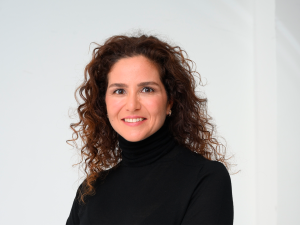
Healthcare organizations face a growing challenge in ensuring that the information they use, share, and act on remains trusted. For Marie-Ange Noué, President of PhactMI and former Senior Director and Head of North America Scientific Communications at EMD Serono, Inc., getting this right is central to the future of Medical Affairs.
“We have more information than we have ever had. What is increasingly scarce is trust.” Noué’s Trusted Knowledge Continuum Framework addresses that challenge by connecting evidence to action through a consistent knowledge architecture: Evidence → Scientific Interpretation → Trusted Medical Information → Clinical Decision → Better Patient Outcomes. The goal is not simply to manage content, but to preserve scientific integrity and trust as knowledge moves across an increasingly complex healthcare organization.
Building a Continuum of Trusted Knowledge
The challenge is that knowledge is often fragmented across publications, Medical Information, field medical teams, congress activities, internal databases, guidelines, labels, and digital platforms. Each source may be scientifically sound, yet the organization can still struggle to operate from one connected version of the science.
“If the evidence is outdated, if scientific interpretation introduces bias, if different functions communicate different versions of the science, or if the right information cannot be found when a healthcare professional needs it, the continuum breaks.” The framework creates a common evidence backbone from which trusted translations can be developed for different audiences and channels, while maintaining provenance, scientific rigor, governance, and accountability. This shifts the conversation from content management to an organizational operating model for preserving trust.
Start With the Problems, Not the Framework
Securing organizational buy-in requires making the value of a unified knowledge framework tangible. Noué starts with the operational problems they already face. Clinical leaders can examine how much time teams spend searching for current information. Medical Affairs can look at how often teams recreate similar scientific content for different channels. Legal and Compliance can assess the risk and rework created by inconsistent versions, while administrative leaders can quantify the cost of duplication.
A high-value use case can then demonstrate what changes when one governed evidence backbone supports Medical Information, field medical, congress responses, digital channels, and AI-enabled engagement without rebuilding the science repeatedly.
Shared governance is critical. Clinical and scientific functions define trusted knowledge, technology makes it accessible and scalable, and Legal, Compliance and Privacy establish the necessary guardrails. “Buy-in comes when people see that the framework is not adding another layer of work. It is eliminating fragmentation, duplication, and uncertainty.”
Moving From Content Owners to Knowledge Orchestrators
Fragmentation is only one of the challenges: versioning creates another. A presentation from six months ago, a recent publication, and an updated response document can leave teams working from different versions of what should be the same scientific truth. “We still manage too much healthcare knowledge as documents rather than knowledge.” Even a scientifically rigorous document has limited value if its information cannot be discovered, structured, reused, or understood by emerging technologies.
The answer lies in common evidence standards, clear ownership, metadata, provenance, version control, and governance. It also requires organizations to learn systematically from the questions healthcare professionals are asking, creating a feedback loop between engagement and the knowledge ecosystem. The mindset changes from content owners to knowledge orchestrators. The objective is not to produce more information, but to ensure the right information reaches the right person without losing its scientific integrity.
Making AI Accountable to Trusted Knowledge
As AI becomes increasingly embedded in healthcare workflows, the quality of the knowledge beneath it becomes even more important. AI can retrieve and synthesize information at scale, but it cannot determine which sources an organization considers authoritative or whether evidence has been superseded. “AI can generate. Humans remain accountable.”
That makes provenance, version control, evidence hierarchy, metadata, defined ownership, refresh cycles, traceability, and human scientific oversight essential components of an AI-ready knowledge architecture. For healthcare leaders, this means prioritizing trusted knowledge before prioritizing AI platforms. Organizations need structured, modular, evidence-linked, and machine-readable knowledge that can safely support multiple channels and technologies.
The Foundation for Resilient Medical Engagement
Noué’s framework positions trusted knowledge as enterprise infrastructure. Just as organizations have invested in data and technology infrastructure, they need to understand where authoritative knowledge resides, who owns it, how it is updated, and how it moves across the enterprise. The question is, therefore, what knowledge an organization trusts enough to put behind AI. “The technology may change. The requirement for trust does not.”
For Medical Affairs, that principle has implications well beyond technology. A resilient knowledge foundation can strengthen scientific communications, improve medical engagement and help organizations move from information delivery toward better clinical decisions and patient outcomes.