 Wolf&Grayson Editorial
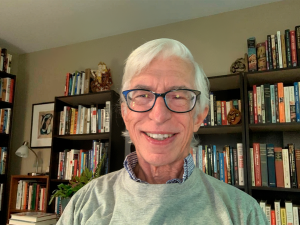
Is pressure the price of leadership? Perhaps, but David B. Frost believes it is something leaders can learn to navigate rather than simply endure. After two decades on Wall Street, where he progressed from Morgan Stanley’s fast-paced trading floor to co-managing a $2 billion hedge fund, Frost now applies those lessons as CEO of fassforward Consulting Group, helping executives strengthen their resilience and ability to lead through uncertainty.
“The important divide is between being your own toughest critic and being your own worst enemy,” says Frost, whose work with executives centers on pressure leadership. In his view, high-performing leaders are not distinguished by avoiding mistakes but by how they recover from them, adapt, and make the next decision with clarity instead of self-doubt or fear.
The Hidden Cost of High-Stakes Decisions
Wall Street exposed Frost to two very different forms of pressure. At Morgan Stanley, where he worked on a trading floor of roughly 600 people, success depended on making rapid decisions with incomplete information. “You can’t second-guess yourself,” he says. “You have to make quick decisions and move forward.” Those early years taught him that mistakes are inevitable when managing risk. What matters is whether those mistakes become learning opportunities or personal burdens.
Looking back, Frost acknowledges that his greatest challenge was not making poor decisions but allowing them to define his self-worth. “Being your own toughest critic is about understanding the mistake you made, learning from it, and applying it to your next decision. Being your own worst enemy is saying, ‘I can’t believe I made that mistake. You don’t belong here.'” Executives who become trapped by self-criticism often lose the emotional capacity required for sound judgment, while those who reflect objectively strengthen their decision discipline over time.
Applying Risk Management Beyond Finance
When Frost joined New Mountain Capital, the pace slowed but the stakes grew significantly. As co-portfolio manager of a fund that eventually exceeded $2 billion in assets, every investment decision carried responsibility far beyond financial returns. “Our two largest investors were state pension funds,” he says. “This was about teacher pensions and public worker pension funds.” Managing that responsibility reshaped his understanding of risk management. The weight of decisions became deeply personal, because every outcome affected people who trusted others to safeguard their futures.
That perspective now influences how he helps executives approach high-stakes decisions. Rather than reacting emotionally to uncertainty, leaders benefit from slowing their thinking, evaluating consequences carefully, and recognizing that composure often produces better outcomes than urgency. The principle extends well beyond finance. Whether leading an early-stage company, navigating organizational change, or responding to a crisis, disciplined thinking consistently outperforms emotional reaction.
Composure Is a Leadership Advantage
Despite his professional success, Frost paid a significant personal price. Years of sustained stress eventually manifested physically through a herniated disc and chronic pain severe enough that he struggled to lift his newborn daughter. “My body forced me to take a step back and recognize that I was losing myself physically and mentally,” he says. That realization led him to yoga and meditation, practices that ultimately transformed both his health and his leadership philosophy. He credits those experiences with teaching him that emotional regulation is not a luxury reserved for quieter moments. It is preparation for the moments that matter most.
“What I’ve learned to help leaders stay clearheaded and decisive is to prioritize themselves more than they do.” For Frost, executive coaching increasingly begins with helping leaders create enough mental and physical capacity to perform consistently under pressure. Work-life balance is unrealistic, particularly for senior executives, but completely neglecting personal wellbeing comes at a cost.
“The high-pressure stressful situations are the ones that pop up unexpectedly,” he says. “If you’re coming into that exhausted, sleep-deprived, and having put all your time and energy into work and family and none into yourself, you’re not going to have anything left in the tank.” His advice for how to lead under pressure often starts with small habits rather than dramatic lifestyle changes. Even a short walk, a proper lunch, or a few minutes of reflection can improve performance psychology by creating the mental space required for better decisions.
Leadership Resilience in the Age of AI
For Frost, building resilience as a senior leader starts with greater awareness. Awareness about how you think and handle setbacks. Awareness that mistakes will happen. Markets will fluctuate. Technology will continue to evolve. Leadership endures because people continue to look for calm, thoughtful judgment when uncertainty is highest. How we get to that state is different for every leader.
As artificial intelligence (AI) reshapes executive decision-making, Frost sees a new challenge emerging. “We’re seeing tremendous decision fatigue,” he says. Leaders must now validate AI-generated outputs while maintaining accountability for every decision that carries their name.
The greater opportunity, however, lies in recognizing that technical expertise alone is becoming less distinctive. Knowledge can increasingly be generated by machines. Trust, curiosity, adaptability, and judgment cannot. “There are two paths with AI,” Frost says. “People who are letting AI do the thinking for them, or people who are using AI to enhance their thinking.” The strongest leaders never stop learning. They remain curious, adaptable, and willing to examine their own assumptions.
Follow David B. Frost on LinkedIn or visit fassforward for more insights on leading under pressure, resilience, and high-stakes decision-making.