 Wolf&Grayson Editorial
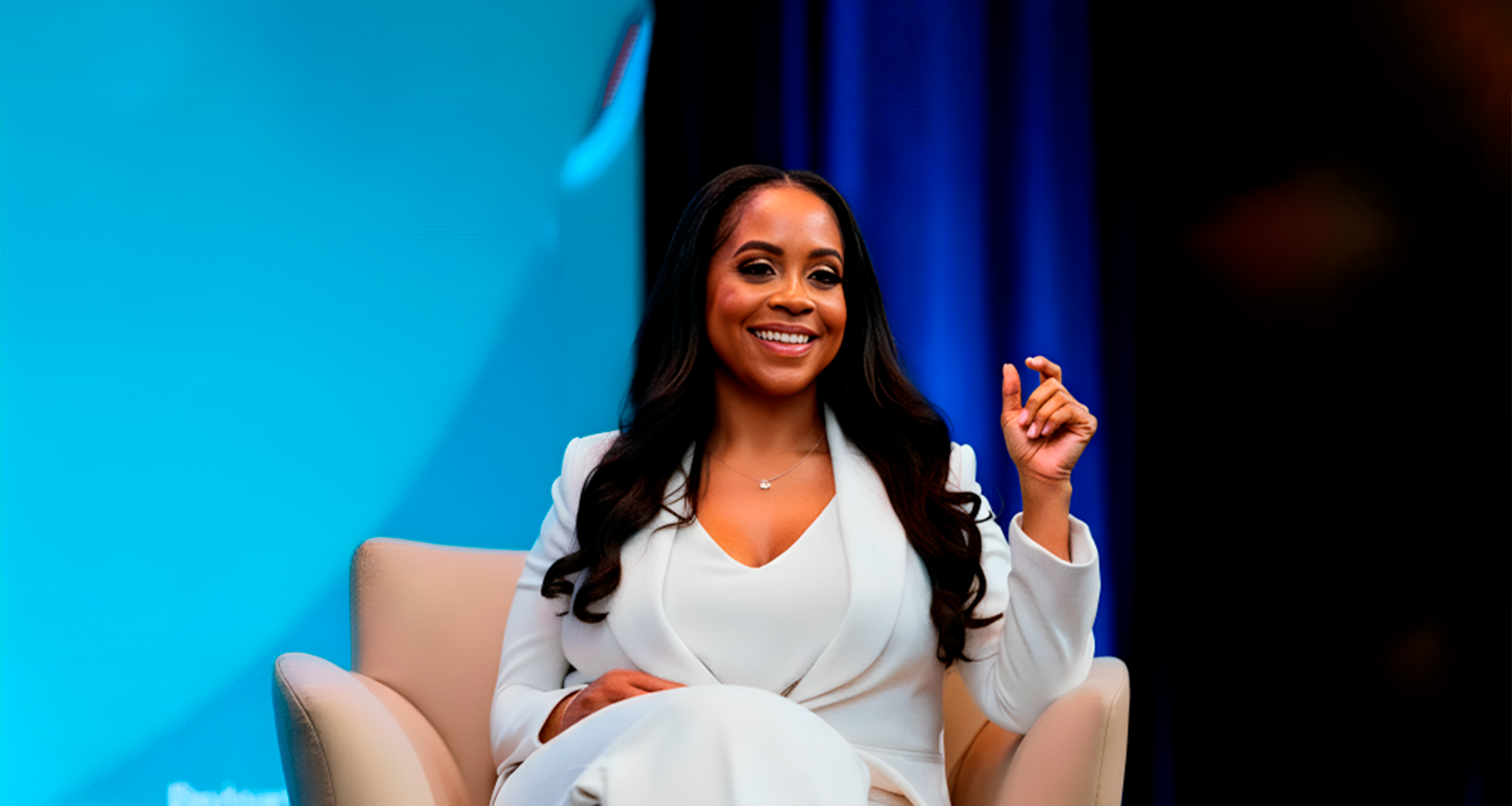
Real estate investors spend considerable time evaluating what can be improved. Buildings can be redesigned. Brands can be repositioned. Operations can be strengthened, and capital structures can be adjusted. But some of the most important characteristics of an investment cannot be recreated later. Kristyl Nelson, an experienced operator, investor, real estate developer, and Global Chief Operating Officer of Kindah Enterprises, the parent company of Kindah Capital Group, that’s where the evaluation becomes particularly interesting.
Her investment philosophy begins with a simple question: What does this property offer that someone else cannot easily replicate?
Rather than starting with the building and reasoning outward to the land, Nelson starts with what makes the land distinctive and asks what can intelligently be created around it.
“Buildings can evolve. Brands can evolve. Operations can improve. Capital structures can change,” she says. “But truly differentiated real estate gives you something to build from that another investor may not be able to simply reproduce.”
Scarcity Is Not The Same Thing As Luxury
The word luxury does an enormous amount of work in real estate marketing, and almost none of it in underwriting. Nelson draws a hard line between the two concepts. Finishes, service, and privacy can all qualify as luxury, and all three can be bought by a competitor with sufficient capital and a good design team. Scarcity cannot. “What does this property have that another developer can’t easily go out and create?” she asks. The list she works from is deliberately physical and legal rather than aesthetic: waterfront, acreage, views, zoning or entitlements, access, and the ability to assemble a meaningful amount of land in markets where large parcels have become genuinely hard to find.
The distinction matters more than it sounds, because it changes what a competitor can do to you. A rival who outspends you on marble has entered a race you can re-enter next year. A rival who cannot source comparable land has not entered the race at all. Nelson points to the High Life master plan in Negril’s West End as an illustration of the principle: a plan encompassing roughly 65 acres with approximately 1,800 feet of beachfront access. Her conclusion from that scale is blunt and worth sitting with. “You can build another beautiful hotel. You can’t necessarily recreate the land beneath it.” That is why, in her view, the conversation about value should sometimes begin well before anyone discusses the building. For Nelson, the objective isn’t simply to own something rare. It’s to understand how those distinctive characteristics can translate into lasting economic value.
Location Is More Than An Address
“Location, location, location” survives because it is true and gets misapplied because it is lazy. Being in a desirable market is a starting condition, not a thesis. Nelson wants to know why a particular location matters. She asks: What surrounds it? How do people physically reach it? What naturally draws them there? What is changing nearby? What does the site permit that another site in the same market would not? Those questions do more than establish present value. They establish whether the characteristics in question are likely to become more valuable as the destination around them shifts.
Her reading of Negril, Jamaica comes from operating businesses there since 2006, which she treats as a different kind of knowledge from market reports. Watching a destination evolve from the ground teaches something the data lags on, which is that two properties inside the same market can represent completely different opportunities. The West End offers a distinct physical experience from the traditional Seven Mile Beach resort corridor, and the High Life development materials identify the area’s elevated oceanfront character and the scarcity of comparable development sites as part of the property’s positioning. The market matters. But understanding what makes a particular property distinctive within that market is where deeper investment judgment comes into play. For Nelson, it’s about recognizing not only where an asset is located, but what gives that location lasting value.
Optionality And The Operating Case Have To Reinforce Each Other
The characteristic Nelson finds most interesting as an investor is optionality, which she defines as the number of intelligent paths a property leaves open. A site that works under one very specific scenario gives you one path and no margin for a market that moves. A property capable of supporting different uses, experiences, phases, or revenue-generating components gives you a far broader canvas. She is careful about the limits of that logic, noting that optionality is not a licence to do everything simply because the land permits it. The point is to understand what possibilities exist before committing. The High Life master plan reflects that approach, bringing together two differentiated hospitality concepts alongside branded residences and resort amenities rather than treating the property as a single hospitality product. “The land isn’t simply supporting a building. It’s supporting an ecosystem.”
That is where Nelson’s operating background separates her from a purely financial read. She does not naturally divide the real estate from what happens inside it. “A beautiful property with a weak operating concept doesn’t interest me nearly as much as a property where the physical asset and the business model reinforce one another,” she says. The relationship has to run both directions. The real estate should make the operation better, and the operation should make the real estate more valuable, whether that shows up in how restaurants, residences, wellness, and guest experiences interact in hospitality, or in how a building supports customer flow, staffing, and logistics in another sector. She treats highest and best use as an operational question rather than a purely development one, asking not only what can be built on a site but what can work exceptionally well there. For Nelson, the objective isn’t simply to identify scarce real estate. It’s to understand what that scarcity makes possible.
The right location creates opportunity. Thoughtful development gives it form. Strong operations bring it to life. And disciplined capital helps turn that opportunity into long-term value.
It’s a philosophy that continues to influence how she evaluates real estate and investment opportunities, including those pursued through Kindah Capital Group, a subsidiary of Kindah Enterprises.
“I’m not only interested in what can be built on a piece of land,” Nelson says. “I’m interested in what makes that land difficult to replicate and what we can create because of it.”
Follow Kristyl Nelson on LinkedIn for more insights on real estate investment, hospitality development, and operator-led asset strategy.