 Wolf&Grayson Editorial
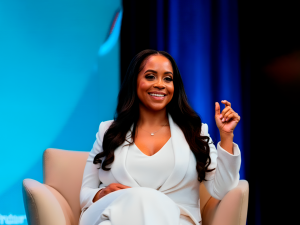
Most executives are exceptionally well trained to manage what is visible: outcomes, people, strategy, and results. What they are almost never taught is how to manage their own internal state. The unprocessed pressure does not disappear. It redirects outward, into decisions, communication, culture, and the performance of everyone around them. Damesha Craig, executive coach and founder of Leadership Garden AI™, has built her practice around a principle that most leadership development frameworks skip entirely. “What isn’t processed internally will always be projected externally,” Craig states plainly.
The Soil Is Where Everything Starts
Craig uses a consistent metaphor across her work, ‘the garden’, not because it is poetic, but because it is precise. Compacted soil is not immediately visible. The plant above it can appear healthy for a time. But the strain is real, progressive, and eventually shows up in everything. The same dynamic operates inside leaders who stop examining their internal state and focus exclusively on external performance.
The disconnect begins the moment a leader prioritizes performance over self-awareness, and the fix is not more resilience training or a better morning routine. It is a regular auditing process, a structured practice of checking the soil of leadership, not just the fruit it produces. Craig does this monthly. Others do it quarterly or biannually. The cadence matters less than the commitment. Without it, the gap between how a leader appears and how a leader actually operates widens invisibly until it becomes visible in all the wrong ways.
Burnout Is an Alignment Problem, Not a Resilience Problem
The reframing Craig offers on executive burnout is one of the most commercially significant in leadership today: burnout is not an individual failure of resilience. It is a systemic failure of alignment. When leaders are misaligned, decision quality degrades, teams absorb the impact, and performance becomes unsustainable. Boards treating this as a business liability, rather than a wellness concern, are not being trendy. They are responding to a structural reality. And in that reality, leadership alignment is no longer optional; it is infrastructure.
What was previously labeled ‘wellness’, Craig reframes as ‘capacity’: the ability to think clearly under pressure, regulate energy, make aligned decisions, and lead others without self-depletion. “You cannot force a plant to produce more by pulling on it,” she notes. “You have to nourish the system it grows from.” For leaders wanting to begin creating internal alignment, Craig offers three practical entry points: start with clarity about what actually matters, check your energy rather than just your calendar, and examine whether decisions are driven by pressure or by purpose. That last question, asked honestly and regularly, rewires how leaders make decisions.
Purpose Is Not a Destination
The shift Craig observes in the next generation of executives is not simply generational preference. It reflects a more sophisticated understanding of what purpose actually is. Previous generations were taught to find purpose, to locate it, lock it in, and measure success against it as a fixed external point. The leaders emerging now understand that purpose is not fixed. It moves in seasons: building, refining, being stretched into something genuinely new. “They’re not chasing purpose as a destination,” Craig reflects. “It’s a living alignment. You don’t find it once, you learn how to move with it as it evolves.”
The leaders she sees now are leading from identity rather than expectation, a shift that produces fundamentally different decisions, different organizational cultures, and a fundamentally different relationship between a leader’s internal state and the performance they are capable of sustaining. In a garden, nothing blooms all year round. Growth requires not just conditions for expansion but also conditions for rest and evolution. Purpose, understood this way, is not something a leader arrives at. It is a way of operating, one that requires the same intentional cultivation as anything else worth growing.
Follow Damesha Craig on LinkedIn or visit Leadership Garden AI for more insights on purpose-driven leadership, executive coaching, and building the internal alignment that sustains high performance.