 Wolf&Grayson Editorial
Organizations may still be debating their enterprise AI strategy. Their employees, in most cases, have already moved on.
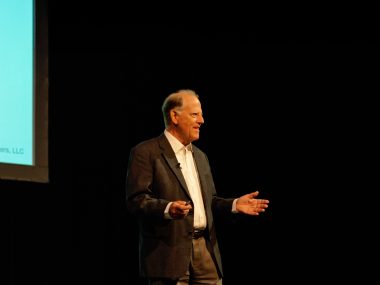
Across industries, teams are quietly integrating generative AI into their daily workflows. Though their instinct may be right, often times these tools are used without formal approval and frequently without their organizations’s knowledge. For T’Juana Albert, Vice President (VP) of Business Integration and Assurance at GumGum, this is creating one of the most urgent leadership challenges facing modern companies.
Albert has spent years building operational frameworks across legal operations, compliance, mergers and acquisitions (M&A) integration, and now AI adoption. Her work inside GumGum, a digital advertising Mindset Company™ operating across more than 19 global markets, has centered on operationalizing AI governance at scale without slowing innovation. “The question for leaders is not whether AI adoption is happening,” Albert says. “The question is: are they shaping it?”
Employees using AI at work is an active operational reality. Companies that fail to lead AI adoption risk creating a culture of shadow AI, where employees independently adopt tools outside official oversight. That gap does not pause AI Adoption, it just removes leadership from the equation.
The Hidden Cost Of Shadow AI
When employees independently connect AI systems to company workflows, sensitive information, intellectual property, and customer data can move through platforms that have never been reviewed by legal, security, or compliance teams. “By the time leadership comes together to draft an actual policy, the behavior is already baked into how the work is getting done,” Albert says. “It’s invisible, it’s inconsistent, and it is entirely outside of that policy.”
Some organizations are delaying formal implementation because they believe they are not yet ready for generative AI. Meanwhile, employees are making their own decisions about which tools to use to get the work done. That disconnect increases liability and weakens AI oversight across the business. “The less you know about what’s being deployed, the bigger the risk and the liability to the business,” Albert says.
Building Responsible AI Inside The Enterprise
When GumGum began architecting its AI adoption strategy, Albert said “The first thing we did was listen. Not to the vendor. Not to analysts. To the people actually doing the work.” Employees were asked what problems were they trying to solve, which AI tools they were already using, and where they believed AI could improve efficiency. The results revealed widespread AI adoption across departments. Employees were using AI to accelerate workflows, draft client-facing materials, and analyze campaign data. “Their instinct isn’t wrong,” she says. “We just didn’t have the infrastructure.” Ultimately, the survey results helped to shape GumGum’s broader responsible AI and operational strategy, and contributed to levels of accountability often missing from enterprise AI programs.
GumGum’s AI governance acts as a growth lever tied directly to operational realities. The approach centered on identifying AI champions inside each department who understood both the team’s challenges and the practical value of new tools. Those champions are accountable for measuring time savings, operational efficiencies, and potential revenue impact (if applicable). The reporting structure creates measurable key performance indicators (KPIs) tied to AI compliance, adoption, feasibility and business value.
The Cross-Functional Leadership Most Companies Skip
Effective AI governance begins with bringing the right people into the room early. At GumGum, that meant building governance alongside legal, IT & security, and internal audit teams from the beginning. The structure helped eliminate one of the most common sources of organizational friction: treating legal teams as barriers rather than strategic partners. “Legal typically is seen as a barrier for most companies,” Albert says. “But in many cases, legal becomes a barrier when people implement these tools without looping them in early.”
The company also established a Software Review Committee responsible for evaluating every software request across the organization, including AI tools. The process applies regardless of whether the request involves a single user license or a larger enterprise deployment. The distinction Albert draws between AI governance and operational infrastructure is critical. Governance defines principles, accountability, and sanctioned pathways. Operational frameworks determine how those systems function in practice.
Companies rushing into long-term AI contracts without clear measurement systems may find themselves locked into expensive tools with low adoption rates. GumGum intentionally avoids multi-year agreements for new platforms and discourage automatic renewals until teams could validate long-term value. Implementing quarterly reviews allows teams to reevaluate tools before contract renewal. “If we realize six months in that this tool is not the tool we thought it was going to be, we have time to pivot,” Albert says.
AI Leadership Cannot Wait
Albert believes many organizations still misunderstand the nature of the challenge. The tools already exist. Employees are already experimenting. The operational question is whether executives will build the systems necessary to transform fragmented experimentation into a strategic company advantage.
“AI adoption is a leadership problem before it’s a technology problem,” she says. For organizations still delaying action, Albert sees a narrowing window. “Your employees are already using AI,” she says. “It’s time to proactively lead by building the frameworks, establishing the culture, and enforcing accountability structures that will turn individual experimentation into a company advantage.” For Albert, the urgency is not theoretical. It is operational, measurable, and already underway in the tools employees opened this morning, in the workflows quietly being rewritten, and in the governance frameworks that will either shape that reality or scramble to catch up with it.”
Follow T’Juana Albert on LinkedIn for more insights.