 Wolf&Grayson Editorial
High performers tend to believe their work will speak for itself. That belief is not wrong, since results do matter. But results get a candidate into consideration. What actually determines who gets promoted is a different conversation entirely, one happening in rooms the candidate is not in, among senior leaders asking a question that rarely gets communicated directly: ‘How confident are we in this person’s ability to handle more?’
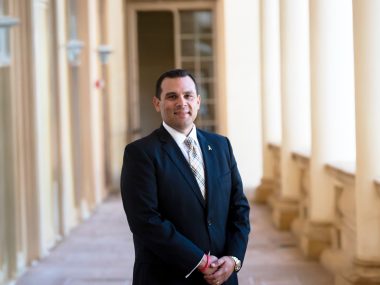
Dr. Luigi A. Pecoraro, executive coach and leadership development specialist, works with high performers who have hit exactly this wall, delivering strong results, expecting advancement, and discovering that performance and promotion readiness are not the same thing. “Excellent performance does not equate to a promotion,” Pecoraro states, “nor does it mean that you’re promotion-ready.”
What Senior Leaders Are Actually Deciding
The succession-ready criteria senior leaders use to make promotion decisions are rarely communicated clearly to those being evaluated. What drives those decisions is not a performance review score. It is confidence, specifically, the confidence a leadership team has in a candidate’s ability to take on a greater scope, make sound decisions with less guidance, and carry low organizational risk if elevated. Character and judgment weigh more heavily than results in that conversation. Results bring a person into consideration. What keeps them there, or removes them from it, is how senior leaders talk about them when they are not in the room.
The trap that catches high performers is subtle. Organizations sometimes resist promoting their strongest performers precisely because they are too valuable in their current roles. The person keeps delivering, keeps being recognized, and keeps being left exactly where they are. The wake-up call arrives when a position opens, and they are passed over, or when promotion conversations simply never seem to happen. At that point, the question is not whether to reposition, it is how and where to start.
The Perspective Shift Model
Pecoraro’s answer to that question begins internally, with what he calls ‘future casting’, the imaginative act of envisioning oneself in a future leadership role before anyone else recognizes one’s readiness for it. Einstein’s observation that imagination is more powerful than knowledge frames the principle that the internal image of who a leader needs to become must precede external recognition. That vision can be built creatively, or it can be modeled by observing a leader at the next level and developing the genuine belief that the same capacity exists within oneself.
The model also requires something more uncomfortable: becoming aware of automatic responses, reactive patterns, and assumptions that may no longer be valid. Leaders who repeat what has always worked, who operate from habit rather than inquiry, are not demonstrating the adaptability that promotion decisions increasingly require.
The perspective shift demands pausing before making decisions, questioning old assumptions, and deliberately broadening the lens to look across disciplines, rather than only within one’s own field. Emergency room staff visiting a NASCAR pit stop to study rapid coordinated team processes is not a metaphor. It is a real example of what lateral thinking produces when leaders are willing to step outside the familiar to solve problems differently.
Learning Agility Is the New Criterion
As AI flattens organizational structures and narrows promotion paths, the definition of what ‘succession-ready’ actually means is changing. Comfort within a fixed function is no longer a signal of leadership potential; it is a signal of stagnation. What decision-makers are actively looking for is learning agility; the capacity to absorb new challenges quickly, collaborate across unfamiliar groups, take calculated risks, fail without retreating, and integrate entirely new elements, including AI, into how work actually gets done.
Amy Edmondson’s concept of teaming captures part of what this requires. The ability to come together rapidly with diverse people to solve a problem in the moment, without the benefit of established relationships or a permanent team structure, is increasingly the environment in which high performers must demonstrate leadership.
Promotions are not earned through power or position. They happen when people around a leader develop confidence in that leader’s judgment and lift them up because they genuinely want to follow. Building that kind of credibility in flatter structures with fewer formal ladders requires leaders willing to keep becoming something new, rather than continuing to perfect what they already are.
Follow Dr. Luigi A. Pecoraro on LinkedIn for more insights on leadership readiness, executive advancement, and the perspective shifts that move high performers into the roles they are capable of holding.